My research is driven by the intersection of advanced deep learning architectures, computational efficiency, and real-world imaging systems. Below are the three primary vertices of my current academic focus.
Distributed ML Training
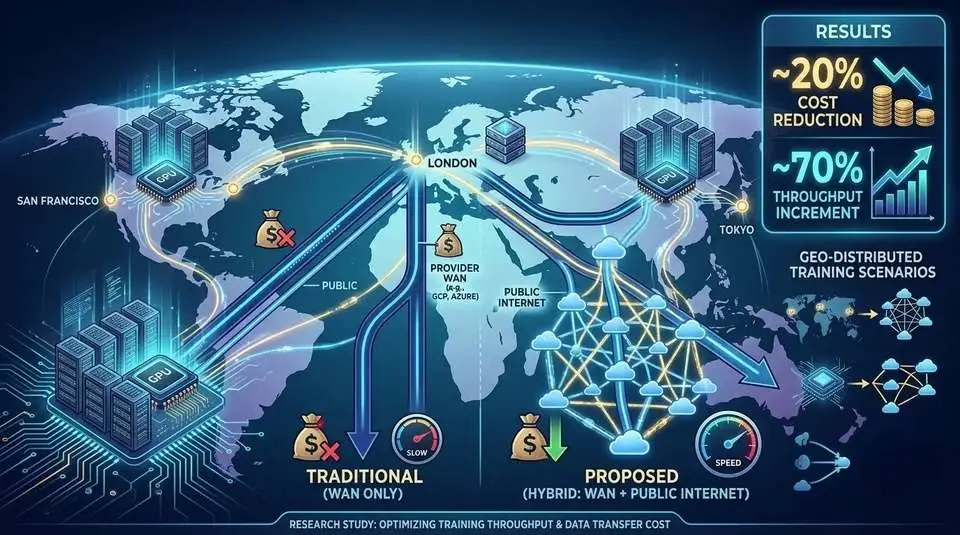
Scaling models efficiently requires rigorous infrastructure management. I am simulating 2D parallel training (Data and Pipeline parallelism) to heavily optimize computational costs and throughput.
A core aspect of this research involves utilizing internet alongside Wide Area Networks (WAN) to establish better, cheaper data transfer rates.
Earth Imaging with SAR
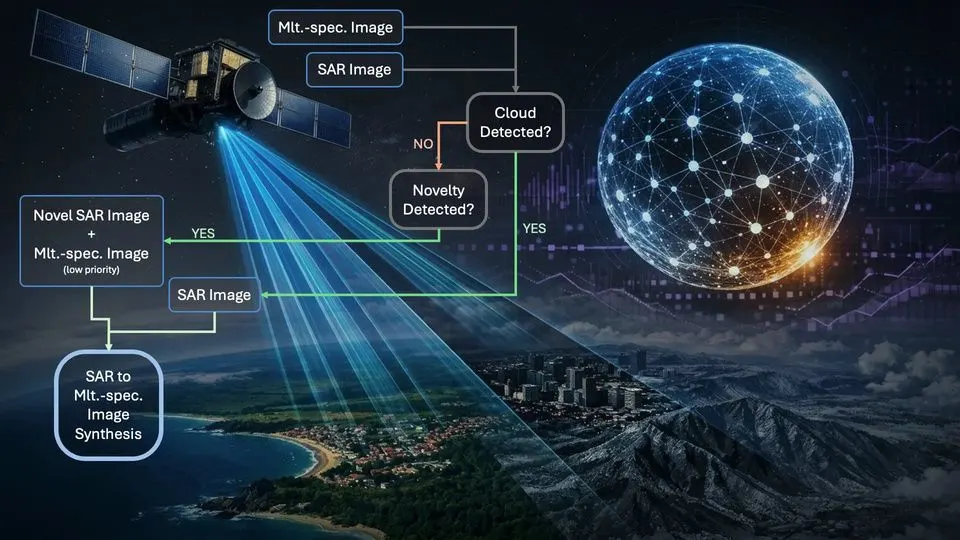
Synthetic Aperture Radar (SAR) provides a profound advantage in Earth observation through its capability for 24/7 active imaging, regardless of weather or daylight. However, the sheer volume of data generated presents a significant transmission bottleneck.
My investigation focuses on designing an optimal model to downstream only the novel aspects of SAR-data tiles. To achieve this, we are engineering lightweight Generative AI models and implementing sophisticated onboard data compression techniques directly at the edge.
Computer Vision & XAI-Based Deepfake Detection
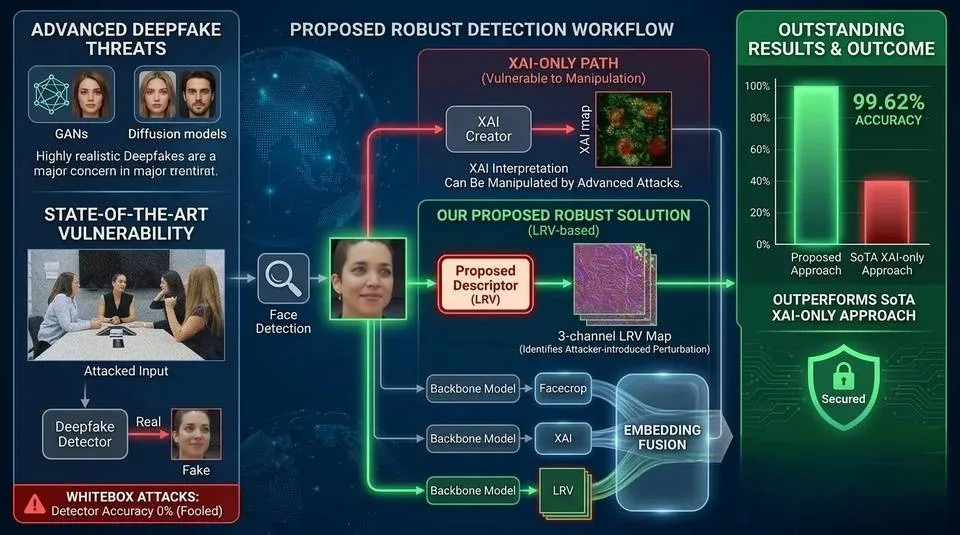
I have developed a novel hand-crafted image descriptor designed to extract highly unique features from input images, significantly improving downstream classification metrics.
Currently, this descriptor is being applied to fortify Explainable AI (XAI) based deepfake detection systems. By analyzing model behavior against sophisticated white-box and black-box adversarial attacks, we aim to establish highly robust, interpretable defense mechanisms.